Snowboarding with a side of mashed potatoes and gravy
While most people think of skiing and snowboarding as winter sports, you may be able to ride into the spring in some areas.

Spring riding does have its advantages:
- It’s snowboarding;
- Cheaper tickets;
- Lodging can be cheaper;
- Fewer people on the slopes mean more room to roam without interference;
- No bitter cold, either on the slopes or in the parking lot as you assemble your gear;
- Increased learning opportunities as you adjust to the changes in terrain and snow;
- Migrating birds that have returned from southern migrations and mountain steams that are thawing provide a new audio experience on the chairlift;
- Travel to and from the mountain won’t be a white knuckle experience, since you’ll be driving on dry roads or flying in clear weather;
- Take advantage of this sports novelty: go snowboarding in the morning and play golf in the afternoon;
- You can do your apres-ski activities outside without feeling chilled;
- Work on your tan more effectively than you can during full-on winter;
- The ski area will look different as the snow melts; get a better understanding of how it’s laid out by riding then;
- If you fall while trying a new trick, it won’t hurt as much.
But there are disadvantages of spring riding as well:
- Some terrain may be marked closed because of thin snow coverage;
- Some of the lifts may be closed, meaning that you have to choose your routes carefully;
- Your window of “good snow conditions” may shrink, with boilerplate in the morning and slush in the afternoon serving as bookends to the midday sweet spot;
- Too-soft snow can grab your board, causing you to spill or simply move at very slow speeds, which can leave you stranded far from the lift at the end of a run;
- If you ride through puddles, you may get wet feet;
- You may find a certain melancholy in seeing “dirty snow” and even bare spots;
- Some slopes may be littered with leaves, especially if the winter has been warmer than usual;
- The gaps between the snow and features in the terrain park may become larger as the snow melts;
- The base area may become muddy;
- You may stink, literally, due to increased sweating in higher temperatures.
You can be like this guy: Look son, no pants!
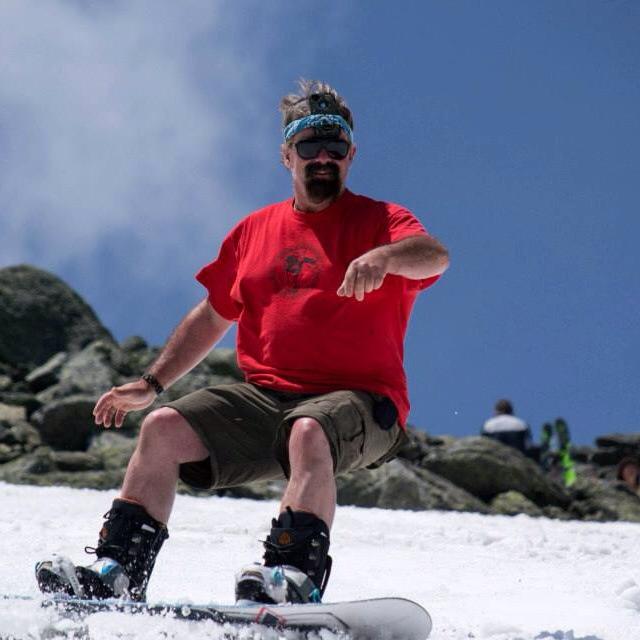
MAKING ADJUSTMENTS
The key to successful Spring riding is to make adjustments.
- Sleep in, but not too much. The snow may too rough to ride in the morning and too soft in the late afternoon;
- More than ever, use sunscreen;
- Wear lighter clothes and fewer layers. If you’re overheated, you probably won’t enjoy riding. Consider a lighter pair of snow pants, or wear ski shorts over your base layer. Your helmet may have an insert that you can take out for increased breathability.
- If you boot up in the parking lot — one benefit of spring skiing is that booting up outside is much more pleasant — take a sheet of cardboard and a folding chair. That way, your feet won’t have to sink into a mud of an unpaved lot.
- Apply warm-weather wax to your board.
- Find some springtime gloves to prevent road rash if you should fall. Springtime snow is much more likely to resemble a pile of crushed ice, which is great for a frozen margarita or a slushie. But falling on it can hurt your skin.
- Scan the slopes for patches of dirt, grayer snow (indicates slower snow), and frozen hardpack;
- Once the sun starts baking the snow, stay in the shade. It may not be as visually appealing as riding in the open sunlight, but your overall experience may be better. Staying in the dark could mean staying at the edges of a trail (in the trees). If the snow condition allows — and often it won’t — check out the glades. Look for slopes that are sheltered from the sun by other parts of the hill or mountain;
- Softer snow will give a slower ride, so ride steeper slopes than you normally do. As the season comes to an end, though, you may find that some of those steeps are unridable, due to melting snow;
- Be ready to respond to a variety of conditions within a single run down the mountain; a slick spot in the shade may give way to a pile of slush or chopped up snow;
- Anticipate whether you will ride through over a pile of accumulated snow, or ride around it;
- If the snow is soft but not too grippy, try something new, whether it’s riding switch, doing some ground spins, entering the halfpipe, taking on small jumps or bumps, or even entering the pond-skimming contest;
- Look for standing water near the entrance corals of ski lifts and exit ramps.
In spring, you may get this:

But be sure you watch out for this:

And on a really great day, you may get this, even in May:
